Car Written Off And It Was Not Your Fault: What Changes
Being blameless changes who ends up paying, not how the car is valued. The claim routes, your excess, your no-claims and where GAP fits.

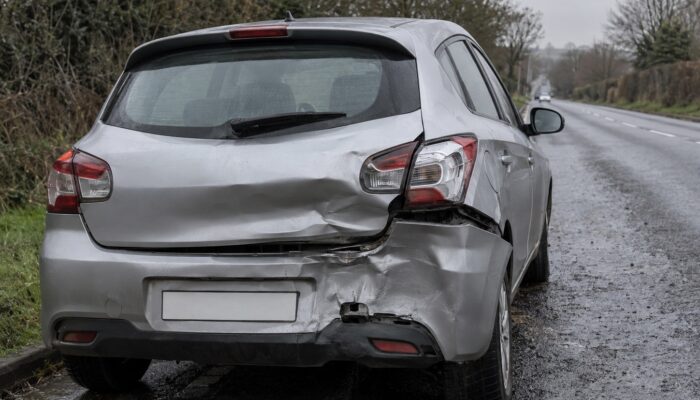
If your car was written off and it was not your fault, being blameless can affect who ultimately bears the cost and how the claim is recorded. It does not make every consequence disappear immediately. Liability may still need to be established, costs may need to be recovered, and the route you use to pursue the claim can make a practical difference.
This guide is about that process, whether or not the car was financed. If your main concern is what happens to an outstanding finance agreement after a write-off, that is covered separately in Car On Finance Written Off: What Happens Next?. This article deliberately does not repeat the finance-shortfall explanation from that page.
What does “not my fault” actually change after a write-off?
A non-fault accident can give you a route to recover losses from the responsible party or their insurer. However, there can be a gap between knowing that you did not cause an accident and the insurance position being formally resolved. Liability and recovery may still have to be established from the available evidence.
That distinction matters because insurance terminology does not always use “fault” to mean personal blame. The Financial Ombudsman Service explains that a claim can be recorded as a fault claim where an insurer has paid costs but has not been able to recover them from somebody else. A non-fault claim is therefore closely connected with recovery, not simply with who caused the collision.
The write-off decision itself remains a separate issue. GOV.UK says the insurance company decides whether the vehicle is written off and how much it will pay. Being the innocent party does not, by itself, create a different total-loss assessment process. Car Written Off: How Much Will The Insurer Pay? covers how that figure is reached.
Report the accident even if you intend to claim elsewhere
Choosing not to claim under your own motor policy does not mean you should simply leave your insurer out of the picture. GOV.UK says an accident must be reported to your insurance company even if you are not planning to make a claim. Your own policy may contain additional notification requirements, so those terms should also be checked.
Keeping evidence can also matter if liability later becomes disputed. GOV.UK says that if you have an accident causing damage or injury you must give your name and address, and the vehicle registration number, to anyone with reasonable grounds for requiring them. Keeping your own record of what happened can matter if liability is later disputed. If required details were not exchanged at the scene, GOV.UK sets out circumstances in which the accident must be reported to the police within 24 hours.
Claiming through your own insurer or the other driver’s insurer
The fact that another driver appears responsible does not reduce the process to one automatic route. Updated Financial Ombudsman Service guidance identifies several ways in which someone involved in a non-fault accident may pursue their losses, including claiming under their own motor policy or dealing directly with the third-party insurer.
Those routes are not interchangeable. They can change which contractual terms apply, how an excess is dealt with, what happens while costs are being recovered and, importantly, what complaint route is available if something goes wrong.
| Route | How it works | A consequence worth checking |
|---|---|---|
| Your own motor insurer | The claim is made under your motor policy, if the loss is covered. | Your policy terms govern matters such as any excess and how the claim affects your no-claims discount. The Financial Ombudsman Service can consider eligible complaints about your insurer. |
| The other driver’s insurer | You pursue the third-party insurer directly for the loss. | The Financial Ombudsman Service says it usually cannot consider a dispute between a consumer and another driver’s insurer. |
| A separate non-fault or accident-management service | An independent company may handle parts of the claim and may arrange credit hire or repair. | This can sit outside your motor policy and can involve a separate agreement with its own obligations and risks. |
If you claim through your own motor insurer
A claim under your own insurance is governed by the policy you bought. That is important because Insureworks does not sell motor insurance and cannot state what a particular motor insurer will do about an excess, replacement transport, claims handling or any other policy benefit. Those answers come from the applicable motor policy and the motor insurer.
Using your own policy can also mean that your insurer initially bears the cost and then seeks recovery elsewhere. The Financial Ombudsman Service says the treatment of no-claims discounts varies between insurers and considers the individual policy terms when reviewing disputes.
There is also a complaint-right distinction. If you believe your own motor insurer has handled the claim or valuation unfairly, you can use its formal complaints procedure and, where the complaint is eligible, subsequently ask the Financial Ombudsman Service to consider it.
If you deal directly with the other driver’s insurer
The Financial Ombudsman Service confirms that recovering your costs directly from the third-party insurer is another possible route following a non-fault accident. Your own insurer still needs to be told about the incident, but the damage claim itself can be pursued separately rather than being made under your own motor policy.
You may also be contacted by the other driver’s insurer. Being approached by the other driver’s insurer does not by itself oblige you to settle directly with it. It recommends understanding exactly what any proposed payment or settlement covers before accepting it.
One significant practical difference is dispute resolution. The Financial Ombudsman Service says it cannot usually investigate a dispute between you and another driver’s insurer when you are pursuing that insurer directly. That is worth understanding before treating the choice of route as an administrative formality.
What happens to the excess in a non-fault write-off?
Whether an excess applies when you claim under your own motor policy depends on that policy. It would therefore be unsafe to assume that being non-fault means an excess can never be applied at the start of the claim. The motor insurer’s terms determine what happens under its contract with you.
Where an excess has been paid or deducted from an own-policy claim, it is generally treated as an uninsured loss that may be pursued from the other driver’s insurer. That does not mean recovery should be assumed before liability and the relevant losses have been accepted, so keep records showing what was deducted and why.
It is also useful to establish who, if anyone, is pursuing that recovery. Do not assume that an excess will automatically find its way back to you simply because another driver appears responsible. The process available to you will depend on the motor policy, the claims route and how liability is resolved.
What happens to your no-claims discount while liability is being decided?
A non-fault accident can still create a temporary no-claims issue while the claim is open. The Financial Ombudsman Service says that where you claim for damage to your own car, the no-claims bonus may be affected until your insurer recovers its costs from the other driver’s insurer. Exactly how the discount operates varies between insurers and policies.
This is where the everyday meaning of “fault” and the insurance-record meaning can become confusing. A fault record can reflect unrecovered costs rather than a finding that you caused the accident. The Ombudsman’s current guidance also says that if it has been established by renewal that you were not at fault, the no-claims bonus should not be affected merely because the administrative claim remains open.
If the treatment does not match your motor policy or you believe the insurer has recorded the outcome incorrectly, the policy terms and claims history are the relevant starting points for challenging the decision.
How is the car valued when you were not at fault?
Fault does not create a separate valuation formula. GOV.UK says that when an insurer writes off a vehicle it pays its current value instead of repairing it, while the Financial Ombudsman Service describes the usual market-value approach as the value of the vehicle immediately before it was damaged or stolen.
For someone who was not responsible for the collision, the useful question is therefore not whether innocence produces a higher valuation. It is whether the valuation itself properly reflects the particular vehicle. The Ombudsman looks at specialist valuation guides and other relevant evidence when deciding whether an insurer’s figure was fair and reasonable.
That assessment can take account of matters such as the precise specification, mileage, condition, vehicle history and credible evidence about the market. It is the evidence about the car that matters to the valuation, rather than which driver caused the accident.
What can you do if you disagree with the write-off valuation?
Start by asking how the figure was reached and checking that the vehicle being valued is actually your vehicle in all material respects. An incorrect derivative, specification, mileage or assumption about condition can make apparently similar valuation evidence much less useful.
The Financial Ombudsman Service says it uses specialist valuation guides and may consider other evidence where appropriate. Its current guidance also says it now typically considers vehicle adverts when assessing market value, while stressing that adverts used as evidence should be as close as possible to the specification and mileage of the vehicle concerned. Expert evidence may also be relevant in some cases.
If you remain dissatisfied, make a formal complaint to the financial business responsible and set out why you believe the valuation is wrong, attaching the relevant evidence. The Financial Ombudsman Service says that if you are unhappy with the final response, or no final response is sent within eight weeks, you can bring an eligible complaint to it.
That Ombudsman route is particularly relevant when the dispute is with your own insurer. As noted above, the Financial Ombudsman Service says it cannot usually investigate a dispute where you are simply pursuing another driver’s insurer directly.
Be clear if you are offered a “non-fault service”
There can be a third route sitting between the two obvious choices. The Financial Ombudsman Service publishes guidance on credit hire and credit repair following non-fault claims. These services are commonly supplied by separate accident-management companies rather than under the customer’s motor policy.
The distinction matters because you may be entering a separate agreement. The Ombudsman says firms referring customers to these services should explain that they are stepping outside the motor policy and should explain the main risks, including what may happen if the third-party insurer disputes liability or the costs being claimed.
That does not make such a service inherently right or wrong for a particular person. It means the agreement, who is providing the service, who is responsible for disputed costs and what complaint rights apply should be understood before treating it as simply another department of the motor insurer.
Where does GAP insurance fit after a non-fault total loss?
GAP insurance sits after the motor-insurance total-loss process, not instead of it. Under the current May 2026 documentation for the GAP insurance policies distributed by Insureworks, the relevant motor insurer must have declared a total loss and provided a settlement before an eligible GAP claim can respond.
It cannot be bought retrospectively to cover a car that has already been written off. Current eligibility requires the vehicle not to have previously been declared a total loss or write-off. The documentation also sets conditions including purchase less than 180 days before the policy starts, a vehicle under 10 years old, a value between £5,000 and £125,000 and comprehensive motor insurance.
Where eligible cover was already in force, the policyholder should check the particular schedule, wording and claims instructions rather than assuming that a non-fault accident guarantees a GAP payment. The current product documentation requires the relevant claim documents within 120 days of the total loss and makes any payment subject to the applicable policy terms, limits, eligibility requirements and exclusions.
Insureworks Ltd is an appointed representative of Your Company Matters Ltd; Insureworks distributes GAP insurance on a non-advised basis and does not underwrite or pay claims. Financial & Legal Insurance Company Limited underwrites these policies and, as insurer, pays valid covered claims. Eligibility and any claim are determined by the applicable policy documentation.
Frequently asked questions
Do I have to claim through my own insurer if the accident was not my fault?
Not necessarily. The Financial Ombudsman Service recognises both an own-policy claim and direct recovery from the third-party insurer as possible routes. Whether you must still notify your own insurer when you intend to pursue the other driver’s insurer is set by your own motor policy rather than by who was at fault, so it is a question for that policy and that insurer.
Will I definitely get my excess back after a non-fault write-off?
There should be no assumption of automatic recovery. Whether an excess is applied initially depends on your motor policy. An excess paid on an own-policy claim may be pursued from the other driver’s insurer as an uninsured loss, but the outcome depends on the liability and recovery position.
Why can a non-fault accident affect my no-claims discount?
Because insurers distinguish between blame and whether claim costs have been recovered. The Financial Ombudsman Service says a no-claims bonus may be affected while an insurer is recovering its costs from the other driver’s insurer. The precise treatment depends on the terms of the particular motor policy.
What evidence can help if I think the car has been undervalued?
Evidence should relate as closely as possible to the actual vehicle. The Financial Ombudsman Service considers specialist valuation guides and may also consider closely comparable adverts, expert evidence, vehicle condition, history, mileage and specification when deciding whether a total-loss valuation was fair.
Can I use the Financial Ombudsman if I claimed from the other driver’s insurer?
Usually not for a dispute solely between you and the third-party insurer. The Financial Ombudsman Service expressly distinguishes a claim against your own insurer, which may fall within its remit, from direct recovery against another driver’s insurer, which it says it usually cannot consider.
Can I buy GAP insurance after the car has already been written off?
No, not for that loss under the GAP insurance policies distributed by Insureworks. Current eligibility requires the vehicle not to have previously been declared a total loss or write-off. GAP is therefore only relevant to the incident where qualifying cover was already in force and the applicable policy conditions are met.