
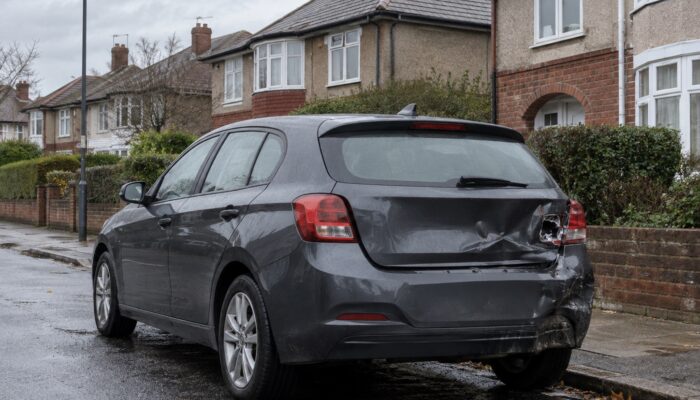
If your car is on finance and has been written off, there are two separate financial figures to deal with: what your motor insurer says the car was worth immediately before the loss, and what your lender says is needed to settle the finance. Those figures are not necessarily the same, and the difference between them can leave an amount still owing to the lender.
You cannot buy GAP insurance after the vehicle has already been written off. GAP insurance is only relevant to your current claim if an eligible policy was already in place when the total loss happened, because one of the eligibility conditions for new cover is that the vehicle has not previously been declared a total loss or write-off.
What happens first when a financed car is written off?
Car Written Off: What Happens Next? covers the same process for a car that is not on finance.
A write-off, also called a total loss, is a decision made by your motor insurer. Insureworks is not the motor insurer and has no involvement in deciding whether a vehicle is written off.
The process will usually involve several separate steps:
- You make the motor insurance claim and the insurer assesses the vehicle.
- The motor insurer decides whether the vehicle is a total loss.
- The motor insurer calculates its settlement, usually based on the vehicle’s market value.
- Your finance provider supplies a settlement figure for the finance agreement.
- The motor insurance settlement and finance settlement figure can then be compared.
- If eligible GAP insurance was already in place, a separate GAP claim may then be relevant.
GOV.UK guidance on scrapped and written-off vehicles confirms that the insurance company decides whether the vehicle is written off and tells you how much it will pay. A write-off does not automatically cancel a loan or finance agreement attached to the car. GOV.UK
The two numbers that matter: market value and finance settlement
The first number comes from the motor insurer. A motor insurer will usually settle a total loss based on the vehicle’s market value, rather than the amount originally paid for the car or the amount still outstanding on finance.
The Financial Ombudsman Service describes market value as the price the vehicle would have sold for at a reputable dealership just before it was damaged or stolen. Its current guidance also explains that, under most motor policies, the relevant value is the vehicle’s value immediately before the loss. Financial Ombudsman
The second number comes from your lender. This is the finance settlement figure, meaning the amount required to settle the finance agreement at that point.
| Number | Supplied by | What it represents |
|---|---|---|
| Market value settlement | Motor insurer | The value of the car immediately before the total loss |
| Finance settlement figure | Lender | The amount required to settle the finance agreement |
They are separate calculations for different things. One values the vehicle, while the other calculates the balance needed to settle the finance.
Why market value and the finance settlement figure can differ
A car’s market value changes as the vehicle ages and its condition, mileage and market circumstances change. The balance on a finance agreement changes according to the agreement and the payments made against it.
That means the two figures do not move together. Your finance settlement figure can be higher or lower than the motor insurer’s market value settlement, so knowing what the car originally cost does not by itself tell you whether there will be a shortfall.
The amount you entered as the vehicle’s value when arranging motor insurance is not necessarily the amount an insurer has to pay after a total loss. The Financial Ombudsman Service says insurers generally use market value at the time of the loss and considers specialist valuation guides and other evidence when assessing valuation disputes. Financial Ombudsman
What happens to the finance agreement after a write-off?
The finance agreement does not end simply because the car has gone. The lender remains entitled to the amount required under the agreement, and it is the lender that provides the settlement figure.
If the motor insurance settlement is enough to meet that figure, there is no finance shortfall between those two amounts. If the finance settlement figure is higher, the difference remains owed to the lender.
This distinction matters because the motor insurer is insuring the vehicle, not guaranteeing that its payment will clear every outstanding finance agreement. The lender is separately concerned with the balance due under the finance contract.
What is a finance shortfall, and who is it owed to?
A finance shortfall exists where the amount required to settle the finance is higher than the amount available from the motor insurance settlement. It is a debt under the finance agreement, so the outstanding amount is owed to the lender rather than to the motor insurer.
For example, there is no assumption that a write-off wipes the remaining finance balance. The important comparison is simply between the motor insurance settlement and the lender’s current settlement figure, without treating either figure as interchangeable with the other.
Car on finance written off not my fault: what changes?
If your car on finance was written off and the accident was not your fault, that does not change the basis on which the vehicle itself is valued. A non-fault accident does not turn a market-value motor insurance policy into one that pays the original purchase price or automatically clears the finance balance.
Fault can matter elsewhere in the claim. Your excess and no-claims discount can be affected depending on how the claim is handled, whether costs are recovered from another insurer and the terms of your policy, but the total-loss valuation is still based on market value. The Financial Ombudsman Service explains that a no-claims discount can be affected while an insurer is trying to recover its costs after a non-fault claim. Financial Ombudsman
An excess may also have to be dealt with even where another driver caused the accident, depending on the claims route used. Citizens Advice notes that an excess paid on a non-fault claim may later be recoverable from the responsible driver’s insurer. Citizens Advice
How GAP insurance works on a car loan if cover was already in place
What is GAP insurance? and What does GAP insurance cover? set out what these policies are and what they can pay towards.
GAP insurance is separate from the comprehensive motor insurance policy. For somebody already mid-claim, the key question is whether an eligible GAP policy was in force when the vehicle became a total loss.
Where Return to Invoice GAP was already in place and the claim is eligible, it may pay the eligible difference between the motor insurance settlement and the original invoice price. Depending on the circumstances, the policy may instead respond to an eligible lender settlement amount, with the most payable limited to the Maximum Benefit stated in the policy schedule.
Contract Hire & Lease GAP works differently because the vehicle is held under a lease or contract hire agreement rather than being purchased in the same way. Where an eligible policy was already in place, it addresses the eligible remaining liability between the motor insurance settlement and the amount required under the lease or contract hire agreement, again subject to the Maximum Benefit and the policy terms, conditions, exclusions and eligibility rules.
For these policies, a valid comprehensive motor insurance policy must be maintained. Required claim documents must also be provided within 120 days of the total loss.
Insureworks Ltd distributes GAP insurance on a non-advised basis as an appointed representative of Your Company Matters Ltd. Financial & Legal Insurance Company Limited is the insurer, so Insureworks does not underwrite the policy, pay claims or make the motor insurer’s write-off decision.
You cannot buy GAP insurance after the vehicle has been written off
If the car has already been declared a total loss or write-off, new GAP insurance cannot be started to cover that loss. This is an eligibility issue, not simply a question of when a claim is submitted.
For a new policy, the eligibility conditions include that:
- the vehicle was purchased less than 180 days before the policy start date
- the vehicle is under 10 years old
- the vehicle is valued between £5,000 and £125,000
- the vehicle has not previously been declared a total loss or write-off
Once the vehicle has already been written off, that final condition is not met. Existing GAP cover may still be relevant to the claim if it was in force at the time of the loss and all applicable terms, exclusions, eligibility requirements and limits are met.
If you think the motor insurer’s valuation is too low
A motor insurer’s first valuation does not have to be accepted without question. You can ask how the figure was calculated and check whether the insurer has used the correct vehicle specification, age, mileage, condition and other relevant information.
Evidence that can help clarify the valuation includes:
- comparable vehicle adverts that closely match the specification and mileage
- relevant valuation information
- evidence of the vehicle’s condition before the loss
- information about relevant factory specification or modifications
- the purchase information if the vehicle was bought recently
The Financial Ombudsman Service says it looks at specialist motor valuation guides together with other available evidence. Where guide values vary, it may also consider evidence such as comparable adverts or an expert opinion, and adverts need to be as close as possible to the specification of the vehicle being valued. Financial Ombudsman
If the issue cannot be resolved directly, you can make a formal complaint to the motor insurer. If you remain dissatisfied with its response, the Financial Ombudsman Service can consider complaints about whether a motor insurer reached a fair valuation. Financial Ombudsman
What happens to your deposit or part exchange?
A deposit or part exchange formed part of the original vehicle transaction. It is not kept in a separate pot that is automatically refunded if the vehicle is later written off.
The motor insurer still bases its normal total-loss settlement on the vehicle’s market value, while the lender separately calculates the finance settlement. Whether anything remains after the finance position has been resolved therefore depends on those figures, rather than on simply returning the amount originally put down as a deposit or supplied through a part exchange.
Where eligible Return to Invoice GAP was already in place, the policy may compare the motor insurance settlement with the original invoice price, subject to its terms and Maximum Benefit. That is a GAP insurance calculation rather than a separate repayment of the original deposit or part-exchange contribution.
What happens to the written-off car?
The letter attached to the vehicle decides what can happen to it next. Insurance Write-Off Categories Explained: A, B, S and N explains each one.
Once the motor insurer has declared the vehicle a write-off, it will normally deal with what happens to the damaged vehicle as part of settling the claim. GOV.UK explains that the insurer will usually arrange for a written-off vehicle to be scrapped where that is required. GOV.UK
There are also DVLA steps associated with a written-off vehicle. GOV.UK explains that the keeper needs to tell DVLA when the insurance company has written off and scrapped the vehicle, and the insurer will normally ask for the relevant V5C documentation as part of the process. GOV.UK
Frequently asked questions
Car on finance written off: what happens?
Your motor insurer normally calculates a settlement based on the car’s market value, while the lender provides a separate finance settlement figure. If the lender’s figure is higher than the insurance settlement, the difference remains owed under the finance agreement.
Car on finance written off not my fault: will the insurer clear my finance?
A non-fault accident does not change the total-loss valuation basis, so the motor insurer will still normally settle according to market value. Fault can affect matters such as an excess or no-claims discount, but it does not automatically make the motor insurer responsible for clearing the finance balance.
How does GAP insurance work on a car loan?
If eligible GAP insurance was already in place when the total loss occurred, Return to Invoice cover may respond to the eligible difference between the motor insurance settlement and the original invoice price or, depending on the circumstances, an eligible lender settlement amount. Payment remains subject to the policy terms, exclusions, eligibility requirements and the Maximum Benefit stated in the schedule.
Car finance, car written off: does the finance stop automatically?
No, the finance agreement does not end just because the car has been written off. The lender provides a settlement figure, and any amount remaining after the motor insurance settlement is still dealt with under the finance agreement.
What happens if you write off a car on finance?
The motor insurance claim and the finance agreement are dealt with separately. The insurer establishes the total-loss settlement, the lender establishes the finance settlement figure, and any difference between them determines whether there is a finance shortfall.
Can I take out GAP insurance now my financed car has been written off?
No, a new GAP policy cannot be taken out to cover a vehicle that has already been declared a total loss or write-off. GAP is only relevant to that loss where eligible cover was already in force when it happened.