
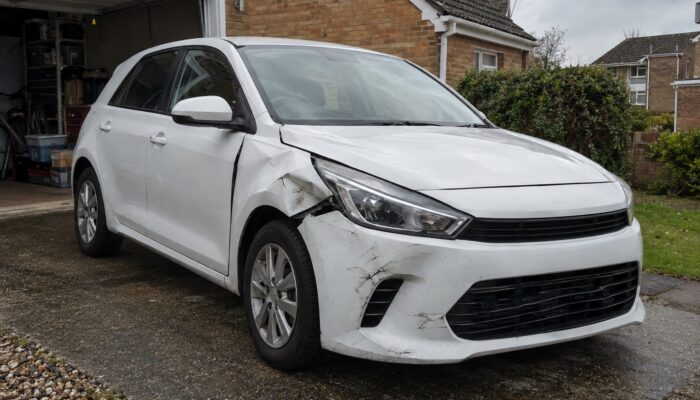
If your car is written off, whether you can keep it depends on its write-off category. Category N and Category S vehicles can be kept through a process where your motor insurer gives you an insurance payout and sells the vehicle back to you, while Category A and Category B vehicles cannot be kept as repairable cars. GOV.UK guidance on scrapping your vehicle and insurance write-offs
There is an important GAP insurance consequence to know from the outset. A vehicle that has previously been declared a total loss or write-off is not eligible for the GAP insurance policies discussed by Insureworks, so buying your written-off car back does not leave the option of taking out one of these GAP policies on that vehicle later.
Insureworks Ltd is an appointed representative of Your Company Matters Ltd and distributes GAP insurance on a non-advised basis. Financial & Legal Insurance Company Limited is the insurer for these GAP products. Insureworks does not underwrite or pay claims, is not your motor insurer and has no part in deciding whether your vehicle is written off.
This article provides information rather than advice. It explains the rules, costs and practical consequences that can affect the decision, but whether you keep a Category N or Category S vehicle is your decision.
Can you keep a written-off car? The short answer by category
GOV.UK divides insurance write-offs into four categories. The category determines whether the vehicle can be repaired and whether retaining it as a vehicle is possible. GOV.UK
| Category | What the category means | Can you keep it as a repairable vehicle? |
|---|---|---|
| A | Cannot be repaired. The entire vehicle has to be crushed. | No |
| B | Cannot be repaired. The body shell has to be crushed, although other parts can be salvaged. | No |
| N | Can be repaired following non-structural damage and used again if repaired to a roadworthy condition. | Yes, through insurer payout and buy-back |
| S | Can be repaired following structural damage and used again if repaired to a roadworthy condition. | Yes, through insurer payout and buy-back |
That makes the first question fairly straightforward. If your vehicle is Category A or B, keeping and repairing the complete car is not an option. If it is Category N or S, there is a route to keeping it, subject to the buy-back process with your motor insurer.
Who decides whether your car is written off?
Your motor insurance company decides whether the vehicle is written off. When it is written off, GOV.UK says the insurance company pays the current value of the vehicle rather than the cost of repairing it. GOV.UK
That distinction matters when considering a buy-back. The insurer has already made a total-loss decision, even though a Category N or Category S vehicle is capable of being repaired and used again if it is returned to a roadworthy condition.
Insureworks is separate from that decision. It does not assess the damaged vehicle, choose its write-off category, determine its current value or decide the motor insurance payout.
What does buying back a written-off car actually mean?
“Buying it back” does not mean that the insurer pays the total-loss settlement and simply lets you keep the damaged vehicle at no cost. GOV.UK describes the process specifically: for a Category N or Category S vehicle, the insurance company gives you an insurance payout and sells the vehicle back to you. GOV.UK
There are therefore two separate parts to consider. One is the motor insurer’s total-loss payout based on the vehicle’s current value, and the other is the price the insurer requires for you to buy the written-off vehicle back.
There is no standard buy-back price stated in the GOV.UK guidance, so this article does not provide or estimate one. The actual amount has to come from the motor insurer handling your claim, and your other significant cost will be whatever is required to repair the vehicle to a roadworthy condition.
The mechanics also mean that a decision cannot sensibly be based on the insurance payout alone. The buy-back amount, repair costs and what happens after the repair are separate parts of the same financial picture.
What is different about Category N and Category S?
A Category N vehicle has suffered non-structural damage. It can be repaired and used again once it has been repaired to a roadworthy condition. GOV.UK
A Category S vehicle has suffered structural damage. It can also be repaired and used again if it is returned to a roadworthy condition, but its structural damage classification creates an additional log book process with DVLA.
Neither category tells you what a particular repair will cost. The categories describe the type of damage and whether repair and future use are possible, rather than supplying a repair budget.
That makes the actual condition of the individual vehicle important. The relevant repair questions include what work is required, who will carry it out and what the confirmed cost of restoring the vehicle to a roadworthy condition will be.
What happens to the log book and what must you tell DVLA?
The paperwork differs between Category N and Category S. If you keep a Category N vehicle, GOV.UK says you can keep the vehicle’s log book. GOV.UK
If you keep a Category S vehicle, you must send the complete log book to the insurance company. You then apply for a free duplicate log book using form V62, and DVLA will record the vehicle’s category in the log book. GOV.UK
There is also a separate DVLA obligation that applies when a vehicle is written off. You must tell DVLA that the vehicle has been written off, and GOV.UK states that you can be fined £1,000 if you fail to do so. GOV.UK
If you want to keep the vehicle’s registration number, GOV.UK says to apply to take the registration number off the vehicle first. This is separate from deciding whether to buy the damaged vehicle back.
What changes permanently after the car has been written off?
The important point is that repairing the vehicle does not erase the fact that it has previously been declared a total loss. For Category S, there is also a specific DVLA record on the replacement log book, because DVLA records that vehicle’s category in the log book. GOV.UK
That previous total-loss status has a definite consequence for the GAP products distributed by Insureworks. Their eligibility criteria require that the vehicle has not previously been declared a total loss or write-off.
Other practical questions are specific to the individual vehicle and the businesses you deal with. These include whether a motor insurer will offer cover for the repaired vehicle and what resale or part-exchange offers are available for that particular car with its write-off history.
There is no fixed resale figure that can accurately be given in advance. The useful figure is the real offer available for the particular repaired vehicle when you eventually come to sell or part-exchange it.
Can you get GAP insurance after buying your written-off car back?
Who does GAP insurance cover? sets out the eligibility rules for these policies in full.
Not under the GAP insurance policies discussed here. The Return to Invoice, Vehicle Replacement and Contract Hire documentation all state that a vehicle must not have previously been declared a total loss or write-off.
That means a Category N or Category S vehicle that you buy back after a write-off cannot subsequently be insured under these GAP policies. Repairing it to a roadworthy condition does not change its previous total-loss status for this eligibility requirement.
This point can work against the commercial interests of a GAP insurance distributor, but it is relevant to the decision. Buying the car back means accepting that these GAP products will not be available for that vehicle afterwards.
Insureworks supplies information about the products on a non-advised basis, and each policy is subject to its own terms, limits, conditions and exclusions. The insurer is Financial & Legal Insurance Company Limited, while the original write-off and buy-back arrangements remain matters for your motor insurer.
What practical questions matter before you decide?
There is no single fact that determines the answer for every Category N or Category S vehicle. The decision depends on the actual numbers and circumstances attached to your car, rather than a general verdict about written-off vehicles.
Useful questions to settle include:
- What write-off category has the motor insurer assigned?
- What is the insurer’s actual price for selling the vehicle back to you?
- What repair work is required to return the vehicle to a roadworthy condition?
- What is the confirmed repair cost, and who will carry out the work?
- Will a motor insurer provide cover for the repaired vehicle, and on what terms?
- What resale or part-exchange offers might be available for that specific vehicle later?
- Are you comfortable owning a vehicle that has previously been declared a total loss?
- Does the loss of eligibility for these GAP insurance policies affect your plans?
The answers can produce very different circumstances from one vehicle to another. A Category N car with one set of repair costs cannot be treated as financially equivalent to a Category S car requiring a completely different repair programme.
The buy-back price is only one cost in the picture. Repair expenditure and the vehicle’s position afterwards also matter, while there is no reliable generic figure for either the future resale value or the insurer’s buy-back price.
What happens if you decide not to keep the car?
If a vehicle is Category A, the entire vehicle has to be crushed. If it is Category B, the body shell has to be crushed, although other parts can be salvaged from it. GOV.UK
For a Category N or Category S vehicle, choosing not to buy it back means you do not retain the vehicle through the payout-and-sale-back process. GOV.UK says insurance companies will usually deal with getting written-off vehicles scrapped for the policyholder. GOV.UK
The motor insurance settlement remains based on the current value of the vehicle rather than its repair cost. Your motor insurer is the party dealing with that settlement and what happens to the vehicle after the write-off.
If you want to retain the registration number, the GOV.UK process says to apply to take it off the vehicle first. You also remain responsible for telling DVLA that the vehicle has been written off.
How can you compare the costs without turning it into a verdict?
The starting point is to separate facts that are known from figures that still need to be established. The insurer’s current-value settlement, the proposed buy-back price and the repair cost are different numbers with different roles.
The comparison can then include the position after repair. That means establishing whether motor insurance is available for the repaired car, what that cover would look like, and what realistic resale or part-exchange options exist for the vehicle.
The GAP insurance point is already known. For the Insureworks-distributed policies covered here, a vehicle that has previously been declared a total loss or write-off is not eligible, so that option cannot be added back into the calculation later.
Those facts allow you to compare the position for your own vehicle without someone else making the decision for you. Whether the combination of buy-back cost, repairs, future insurance position, resale prospects and loss of GAP eligibility works for you is your judgement.
FAQs about buying back a written-off car
If my car is written off can I keep it?
You can keep it if it is a Category N or Category S write-off and your motor insurer sells it back to you as part of the total-loss process. Category A vehicles have to be crushed completely, while Category B vehicles cannot be repaired and their body shells have to be crushed. GOV.UK
For Category N and S, GOV.UK describes the arrangement as an insurance payout followed by the insurance company selling the vehicle back to you. The car can only be used again after it has been repaired to a roadworthy condition.
Is it worth buying back a written off car?
There is no universal verdict because the relevant facts differ from vehicle to vehicle. The decision is yours and can involve the insurer’s buy-back price, the actual repair cost, who will carry out those repairs, future motor insurance availability, resale options and the permanent loss of eligibility for the GAP policies discussed here.
This is information rather than advice. No generic answer can replace the actual figures and circumstances attached to your own Category N or Category S vehicle.
How does buying back a written off car work?
For Category N or Category S, the motor insurer gives you an insurance payout and sells the vehicle back to you. The payout is based on the vehicle’s current value, while the insurer provides the actual buy-back figure. GOV.UK
The vehicle then needs to be repaired to a roadworthy condition before it can be used again. Category S also involves sending the complete log book to the insurer and applying for a free duplicate using form V62.
Can I buy back a Category S car?
Yes. A Category S vehicle can be bought back from the insurance company and can be used again once it has been repaired to a roadworthy condition. GOV.UK
You must send the complete log book to the insurance company and apply for a free duplicate log book using form V62. DVLA will record the vehicle’s category in the log book.
Can I keep a Category N car?
Yes. A Category N vehicle can be repaired following non-structural damage and used again if it has been repaired to a roadworthy condition. GOV.UK
If you retain a Category N vehicle, GOV.UK says you can keep its log book. You must still tell DVLA that the vehicle has been written off.
Can I get GAP insurance after buying back a written off car?
Not under the GAP policies discussed here. Their eligibility rules state that the vehicle must not previously have been declared a total loss or write-off.
That applies even if the Category N or Category S vehicle has subsequently been repaired to a roadworthy condition. Buying the vehicle back therefore permanently changes its eligibility for these GAP products.
Related guides: Car Written Off: What Happens Next?, Insurance Write-Off Categories Explained: A, B, S and N, Will My Car Be Written Off? What Actually Decides It and Car On Finance Written Off: What Happens Next?.