
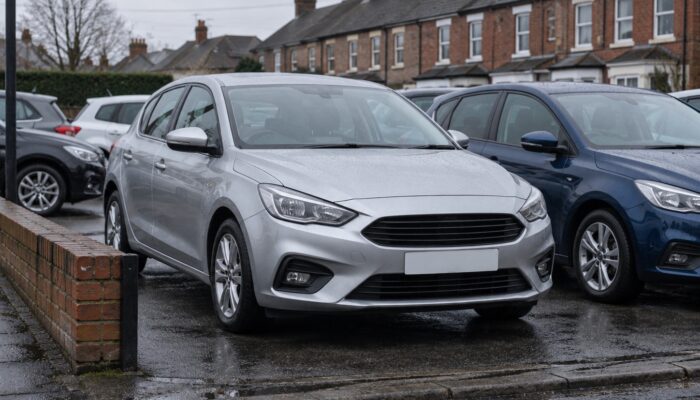
When you are buying a used car, it is easy to assume that entering the registration number into the free DVLA vehicle enquiry service will reveal whether the car has previously been written off. It does not.
The free DVLA check provides useful information about the vehicle, but write-off status and insurance write-off category are not included. To establish whether a vehicle has a recorded write-off history, the relevant record sits within the insurance industry’s register and is accessed through paid vehicle history checks.
The short answer: how to check if a car has been written off
To check whether a car has been written off, use the registration number to check the vehicle information available on GOV.UK, examine the V5C log book and MOT history, ask the seller directly about any previous total loss, and use a paid vehicle history check for the insurance-industry write-off record.
The important distinction is that the free government vehicle enquiry service is not a write-off check. A DVLA result that looks completely normal does not tell you that the vehicle has never been declared an insurance write-off. GOV.UK +1
There is also an important GAP insurance point to establish before buying. A vehicle that has previously been declared a total loss or write-off is not eligible for the current GAP policies distributed by Insureworks, including a repaired Category S or Category N vehicle.
What the free DVLA vehicle enquiry service tells you
The GOV.UK vehicle enquiry service lets you enter a registration number and check a useful range of information held by DVLA. It currently includes: Source: GOV.UK guidance on scrapping your vehicle and insurance write-offs.
- vehicle tax rate and when the tax expires, plus SORN status
- when the MOT expires, the date first registered and the last V5C log book issue date
- year of manufacture, type approval category, weight, engine size and fuel type
- emissions information and export status
These details can help you compare the car in front of you with the official record. For example, the V5C issue date can be checked against the physical log book, while registration and vehicle details can be compared with the information supplied by the seller.
One term needs particular care. The “type approval category” shown through DVLA is not the vehicle’s insurance write-off category, so it must not be confused with Category A, B, N or S.
What the DVLA check does not tell you
The free DVLA vehicle enquiry service does not include write-off status or insurance write-off category. In other words, it does not answer the question “has a car been written off?”
This is particularly important because a search for terms such as “DVLA car write off” can lead buyers towards official DVLA information and create the impression that all significant vehicle history is covered there. The service is valuable for the information it contains, but a clear DVLA vehicle enquiry result is not evidence that the car has no insurance write-off history.
The distinction also explains why checking only the registration details, tax and MOT status leaves a gap in the buying process. Write-off information has to be established separately.
What GOV.UK’s own vehicle-buying checklist covers
GOV.UK’s “Buy a vehicle: step by step” service tells buyers to check that the vehicle details match DVLA’s information, check its MOT history, check for safety recalls and check that the log book is not for a stolen vehicle. Those are separate checks dealing with the vehicle’s identity, recorded test history and other official information. GOV.UK +1
Notably, that step-by-step list does not include an insurance write-off check. This does not mean write-off history is irrelevant; it means the free government buying checklist and an insurance-industry write-off history check are not the same thing.
GOV.UK also has separate guidance on buying repaired written-off vehicles, which refers to obtaining a private vehicle history check to identify a previous write-off.
Where vehicle write-off records actually live
Write-off records are held on the insurance industry’s register rather than being presented through the free DVLA vehicle enquiry service. For a prospective buyer checking a specific vehicle, that information is reached through paid vehicle history checks.
The insurance industry’s vehicle salvage and theft data contains records relating to claims resulting in written-off or stolen vehicles. Official industry information directs somebody checking whether a specific vehicle is recorded as written off towards an independent vehicle provenance check. MIB
That is why the DVLA check and a write-off check perform different jobs. Using the registration number on GOV.UK can confirm the information DVLA makes publicly available, while the previous total-loss record has to be checked separately.
What the write-off categories A, B, N and S mean
Insurance Write-Off Categories Explained: A, B, S and N covers this in more detail. GOV.UK divides insurance write-offs into four current categories. Categories A and B cannot be repaired for use as vehicles, while Categories N and S can be repaired and used again if they are restored to a roadworthy condition.
| Category | Meaning |
|---|---|
| A | Cannot be repaired. The entire vehicle has to be crushed. |
| B | Cannot be repaired. The body shell has to be crushed, although other parts can be salvaged. |
| N | Repairable following non-structural damage. It can be used again if repaired to a roadworthy condition. |
| S | Repairable following structural damage. It can be used again if repaired to a roadworthy condition. |
The distinction between N and S relates to whether the recorded damage is non-structural or structural. Neither category means that the car was never written off simply because it has subsequently returned to the road.
There is no need to rely on a percentage-of-value rule to understand these categories. The official categories describe the status and type of damage rather than giving buyers a percentage threshold.
What the V5C can show, and why Category N may show nothing
The V5C log book deserves particular attention because Category S and Category N vehicles are treated differently. That difference means the absence of a visible write-off category on a V5C cannot, on its own, establish that a car has never been written off.
Category S and the log book
For a Category S vehicle that is being kept, GOV.UK says the complete log book is sent in and a free duplicate is applied for using form V62. DVLA records the vehicle’s Category S status in the log book.
A Category S record can therefore become visible on the replacement V5C. That gives a buyer a useful piece of information to notice when examining the document.
Category N can be different
For a Category N vehicle, GOV.UK says the keeper can keep the existing log book. There can therefore be nothing on that V5C showing the Category N write-off history.
This is the key reason a V5C-only check is incomplete. A log book with no visible Category N marker is not confirmation that the vehicle has never been declared a total loss.
When a vehicle is written off, DVLA must also be told. GOV.UK states that failure to notify DVLA can result in a £1,000 fine. GOV.UK +1
What the MOT history can and cannot tell you
The free GOV.UK MOT history service provides another useful part of the picture. It can show whether previous tests passed or failed, the recorded mileage, when the next MOT is due and copies of current and previous MOT certificates; for tests in Great Britain, it can also show failed items and recorded minor problems.
That information can help you understand the car’s recorded test history, but the MOT database is not an insurance write-off database. A car having an MOT, or having a history of MOT passes, does not tell you whether an insurer previously categorised it as a write-off.
Official MOT guidance also makes clear that the MOT record relates to testable items at the time of the test and is not evidence of the vehicle’s general mechanical condition at other times. An MOT history therefore cannot replace a separate check for recorded write-off status.
What to ask the seller before you buy
The seller can provide information that is not apparent from the free DVLA enquiry. Useful questions include whether the vehicle has ever been declared an insurance total loss, whether it has ever carried a write-off category and, if it has, what category was recorded.
It can also be useful to ask what documentation the seller holds relating to any repairs. Where the seller states that the car has never been written off, asking for that answer in writing creates a clear record of what was represented to you, although it does not replace the separate history checks.
Before completing the purchase, information from different sources can be compared rather than considered in isolation. The registration, make and model can be compared with DVLA information; the physical V5C can be examined; the MOT history can be checked; and any statement from the seller can be compared with the result of the paid vehicle history check.
Conflicting information is significant in itself. For example, a seller’s statement that a car has no write-off history would need further investigation if a vehicle history check records a previous total loss.
What a previous write-off means for insurance and GAP cover
Categories N and S can return to the road if repaired to a roadworthy condition, but roadworthiness and insurance eligibility are separate matters. Motor insurance terms are set by the motor insurer, so cover for a particular previously written-off vehicle has to be established with that insurer.
The position for the GAP policies distributed by Insureworks is clear. A vehicle that has previously been declared a total loss or write-off is not eligible for these policies, even where it is a Category N or Category S vehicle that has been repaired and returned to the road. Where a policy is available, what it may pay towards is subject to the terms, limits, conditions and exclusions set out in the policy documents.
That eligibility point can matter before completing a vehicle purchase if GAP insurance forms part of the buyer’s plans. Finding the previous write-off only after buying the vehicle does not change the policy requirement that the vehicle must not previously have been declared a total loss or write-off.
Insureworks Ltd is an appointed representative of Your Company Matters Ltd and distributes GAP insurance on a non-advised basis. Financial & Legal Insurance Company Limited is the insurer; Insureworks does not underwrite the insurance, does not pay claims and is not the motor insurer.
What to do if you discover the write-off after buying
If a later vehicle history check reveals a previous write-off, keep the result together with the original advert, invoice, messages and any written statements supplied by the seller. Those records provide a clear picture of what information was available and what was said when the vehicle was sold.
Contact the seller with the information and ask for an explanation of the vehicle’s history and any records relating to the previous damage or repairs. If the vehicle was bought using finance, the relevant finance provider can also be contacted where the newly discovered information affects the agreement or raises a dispute.
The motor insurer can clarify how the vehicle’s history affects existing or proposed motor insurance. Where there is a dispute about how the vehicle was described or sold, independent consumer or legal guidance can help establish what options apply to the particular transaction.
For Insureworks GAP insurance, the position does not depend on whether the earlier write-off was discovered before or after purchase. A vehicle previously declared a total loss or write-off is not eligible under these GAP policies.
FAQs about checking whether a car has been written off
How can I check whether a car has been written off?
Use the registration number for the free DVLA and MOT checks, inspect the V5C and ask the seller about previous total-loss history. To check the insurance-industry write-off record itself, use a paid vehicle history check.
The checks have different purposes, so a normal DVLA or MOT result does not answer the write-off question. In particular, Category N history may not be visible on the V5C.
How to check if a car is written off?
The write-off record is not part of the free DVLA vehicle enquiry information. A paid vehicle history check provides access to the relevant insurance-industry write-off record, while the GOV.UK services can be used separately to verify DVLA details and MOT history.
The V5C is also worth examining, particularly for Category S. It cannot be relied on as the only check because a Category N keeper can retain the existing log book.
Does a DVLA car write off check show if a vehicle has been written off?
There is no write-off status or insurance category in the information listed by the free DVLA vehicle enquiry service. It provides information such as tax and SORN status, MOT expiry, registration details, V5C issue date and technical vehicle details instead.
This distinction is easy to miss when searching for a “DVLA car write off” check. The DVLA service remains useful, but it is not the source of the insurance-industry write-off record.
Does Category N appear on the V5C log book?
Not necessarily. GOV.UK says a keeper retaining a Category N vehicle can keep the existing V5C, so the document may contain no visible Category N write-off marker.
Category S is handled differently, with the complete log book sent in and a free duplicate requested using form V62. DVLA records the Category S status on that log book.
Can a Category S or Category N car be used again?
Yes, both Category N and Category S vehicles can be used again if they have been repaired to a roadworthy condition. Category N refers to repairable non-structural damage, while Category S refers to repairable structural damage.
That does not erase the previous write-off history. It also does not make the vehicle eligible for the GAP insurance policies distributed by Insureworks and described here.
Can I get GAP insurance through Insureworks if a car has been written off before?
No. A vehicle that has previously been declared a total loss or write-off is not eligible for the current GAP policies distributed by Insureworks, including previously written-off Category N and Category S vehicles.
Insureworks distributes GAP insurance on a non-advised basis as an appointed representative of Your Company Matters Ltd. Financial & Legal Insurance Company Limited is the insurer, while Insureworks does not underwrite the policy, pay claims or provide the vehicle’s motor insurance.
Related guides: What Is A Total Loss In Car Insurance?, Can You Keep Or Buy Back A Written-Off Car?, Who does GAP insurance cover?.