
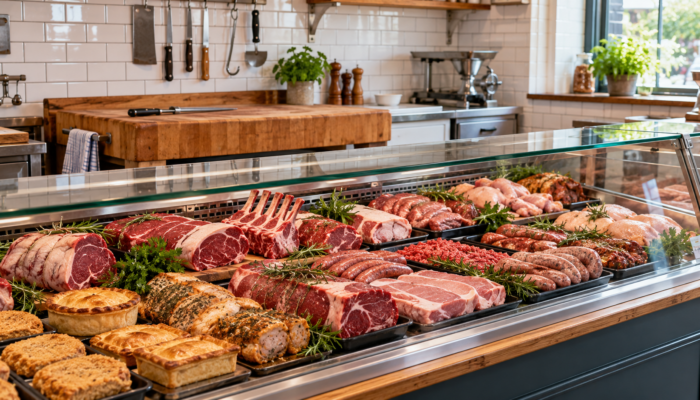
It’s Saturday morning, the queue’s growing, someone’s asking for the perfect Sunday roast, and the sausages are selling faster than you can make them. Just another busy day at the butcher’s counter! But with customers coming and going, and food heading home for dinner, there are a few things beyond the chopping board to think about.
That’s where liability insurance for butchers comes into the picture. Public liability and products liability are different types of cover that may help with certain claims involving customers and the food you sell. Here’s how they can relate to everyday life in a retail butcher’s shop, without too much insurance jargon.
What does liability insurance mean for a butcher?
In simple terms, liability insurance is generally about certain legal responsibilities your business may have towards other people. For a retail butcher, the main areas to understand are public liability and products liability. They deal with different situations, although both may form part of a typical retail policy.
Public liability insurance is generally designed to help with certain legal liabilities if a member of the public is injured, or their property is damaged, in connection with your business. Products liability insurance deals with certain legal liabilities arising from products you’ve supplied. Both depend on the policy terms and the circumstances.
For a broader explanation of how these covers work in retail, there’s also the related read, Public liability insurance for shops. Here, we’ll concentrate on the things that make running a butcher’s shop a little different from running an ordinary high street store.
Public liability and everyday life at the butcher’s counter
A butcher’s shop can be a busy place. Customers queue at the counter, browse what’s on display, move around each other and head towards the door carrying their purchases. With that much coming and going, the occasional unexpected mishap is possible, even on an otherwise ordinary working day.
Imagine a customer slipping on a freshly cleaned floor, tripping at the doorstep or catching their foot on a display. Perhaps something falls from a shelf and causes an injury. These are everyday illustrations of incidents that could lead to someone making a claim against a business.
Whether public liability insurance would respond depends on the circumstances, the business’s legal liability and the particular policy wording. Not every accident automatically creates a valid insurance claim, and having public liability cover doesn’t mean every incident involving a customer will be covered.
The meat you sell: where products liability comes in
Here’s where things become particularly relevant to butchers. Unlike a shop selling shoes or stationery, you’re selling food that customers will eat. Whether it’s fresh cuts, mince, sausages, burgers, pies or cooked meats, the products leaving your counter are an important part of the liability picture.
Products liability insurance is generally concerned with certain legal liabilities arising from products supplied by a business. For a butcher, that may include food prepared on the premises as well as products bought in from elsewhere and sold through the shop, depending on the policy and its terms.
For example, what if a customer reports becoming ill after eating something purchased from the shop? Or says they’ve experienced an allergic reaction to an ingredient in a sausage or marinade? These situations may raise products liability questions, depending on the circumstances, the legal position and the policy wording.
That doesn’t mean a complaint about food will automatically be covered, or that the butcher is necessarily legally responsible. The details matter. Because butchers sell food intended for consumption, products liability is often the part of a retail policy that butchers read most closely.
Retail butcher, wholesale supplier or abattoir: does the trade matter?
Not every business handling meat is treated the same way by an insurer. A traditional high street butcher serving walk-in customers may be viewed differently from a wholesale meat supplier, cutting plant or abattoir. Insurers usually work with lists of accepted trades, and certain activities may require checking first.
What matters is how the business is actually described in the policy schedule. A shop principally selling meat over the counter isn’t necessarily undertaking the same activities as a commercial meat-processing operation. If those activities differ from the policy description, questions about the scope of cover may arise.
Farmers’ markets, deliveries and restaurant customers
Perhaps the shop has started taking a stall at the local farmers’ market. Maybe you’re delivering orders to customers or supplying a nearby restaurant. They’re familiar ways for a butcher’s business to operate, but they may also change where and how liability cover applies.
Cover usually relates to the premises and business activities described in the policy schedule. Activities such as market trading, deliveries and supplying other businesses may require confirmation with the insurer. Changes to the way a butcher operates usually need to be reported, subject to the particular policy requirements.
Is public liability insurance a legal requirement for butchers?
Public liability insurance is not usually a legal requirement for a retail butcher in the UK. However, that doesn’t mean it will never come up in a business agreement. A commercial landlord, farmers’ market organiser or trade customer may ask a butcher to hold public liability cover.
Employers’ liability insurance is different. GOV.UK says businesses generally must obtain employers’ liability insurance as soon as they become employers, although exceptions apply. Employers’ liability may be included in some retail policies but not others, so its inclusion is something to check separately.
What doesn’t public liability usually cover?
Public liability is mainly concerned with certain liabilities towards people outside the business, rather than employees. If a member of the butcher’s own staff is injured while working with knives or equipment, that would usually be a matter for employers’ liability insurance instead.
Liability policies also have exclusions. These vary, but common examples can include deliberate acts and additional liabilities accepted under a contract that wouldn’t otherwise exist. The precise exclusions, definitions and conditions are set out in the policy wording, rather than being identical across every butchers insurance policy.
Limits, excesses and policy conditions
A typical retail liability policy has a limit of indemnity, which is the maximum amount the insurer may pay under the applicable terms. The limit is shown in the policy schedule. Some policies also have an excess, meaning the policyholder may be responsible for part of a claim.
Limits, excesses and conditions can differ between policies. The schedule and wording explain what applies, including any special requirements or restrictions. When it comes to insurance, the small print may not be as exciting as the Saturday specials board, but it’s where the important details live.
What happens if an incident could lead to a claim?
If something happens in the shop, or a customer raises a concern about food they’ve purchased, the policy wording will usually explain the claims procedure. Policyholders are often required to notify their insurer as soon as reasonably practicable about incidents that could lead to a claim.
Policies may also require records to be kept and generally restrict admitting legal liability or agreeing a settlement without the insurer’s agreement. The exact requirements vary, so the policy wording remains the reference point for how incidents and potential claims are reported and handled.
Deciding whether to include liability insurance
Every butcher’s business has its own mix of customers, products and activities. A small counter-only shop may operate differently from one that also makes prepared foods, attends markets or supplies restaurants. Those differences can be relevant when considering the scope of public and products liability insurance.
Whether to include liability insurance, and at what limit, is the butcher’s own decision. The policy schedule and wording explain the cover available and its restrictions. For the wider picture, the butchers insurance page on the Insureworks website covers other aspects of butcher shop insurance, such as the premises, equipment and chilled stock.
Frequently asked questions
Does products liability cover a customer who becomes ill after eating meat from the shop?
It may, depending on the circumstances and the policy wording. Products liability generally concerns certain legal liabilities arising from products supplied by a business, including food. However, a customer reporting an illness doesn’t automatically establish liability or mean an insurance claim will be accepted. The particular circumstances and policy terms matter.
Does public liability insurance cover my staff?
Usually not. Public liability is generally intended for certain claims involving members of the public or other third parties. Injuries to employees, including those occurring while working with knives or equipment, would usually fall under employers’ liability instead. Some retail policies include that cover, while others don’t, so the schedule needs checking.
Does it matter if I also supply restaurants?
It may. Supplying restaurants or other businesses can be a different activity from selling directly to customers in a retail butcher’s shop. The activities described in the policy schedule should reflect what the business actually does, and supplying trade customers may require checking with the insurer depending on the policy.
Looking into butchers insurance?
From the shop floor to the food leaving the counter, liability insurance has a few different angles for a butcher to consider. If you’re exploring the available options, you can get a quote through the retail business insurance page on the Insureworks website. Quotes and cover come from our insurance partner, not Insureworks.
As with any insurance, what is included depends on the individual policy, its schedule, wording and conditions. This page is information only and is not personal advice. Insureworks is not the insurer and does not underwrite or pay claims.