
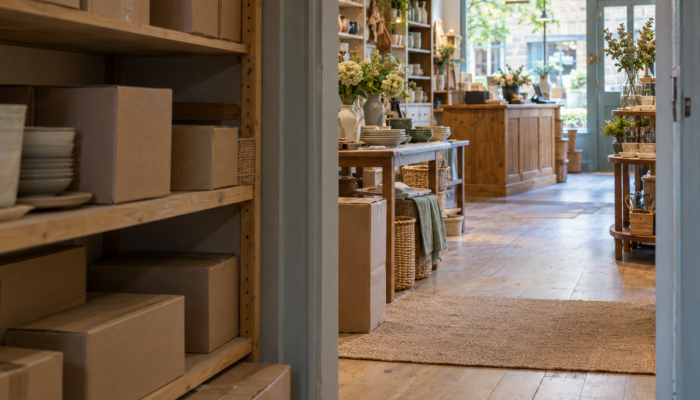
Your shop is more than four walls and a till that occasionally refuses to cooperate. There’s your stock, your displays, your customers and all the little things that keep business ticking along.
So, do you need business insurance for a shop? That depends on how your shop operates, what could go wrong and which risks you’re comfortable managing yourself.
Rather than getting lost in insurance jargon, let’s take a little walk around your shop and look at where different types of cover might come into the picture. A typical shop policy is made up of separate cover sections, and each business chooses which ones to include.
Is business insurance a legal requirement for a shop?
Not every type of business insurance is compulsory. According to GOV.UK’s “Employers’ liability insurance” guidance, a business must get employers’ liability insurance as soon as it becomes an employer, with some exceptions, such as businesses employing only close family members. Some shop policies include employers’ liability and some don’t, so a shop with staff would need to check and, if needed, arrange it separately.
For more on the legal side, there’s a separate article called Do I need retail business insurance? Here, we’re keeping things focused on your shop and what happens inside it.
Let’s take a walk around your shop
Every shop is different. Some are packed with shelves of products, while others have a carefully arranged display and just enough room for customers to browse.
A typical shop policy has several possible cover sections, each applying only if selected and shown in the policy schedule. Let’s see where they might fit as we walk around.
The shopfront and building
First stop, the shopfront. You’ve probably spent plenty of time making it look inviting, from the window display to the sign above the door. But what happens if the building or its fixtures are damaged?
Property damage cover may be relevant here. If you own the building, or you’re responsible for insuring it, you may want to consider buildings cover under this section.
Renting instead? Your lease may explain who is responsible for insuring what, so checking its terms can help clarify where you stand.
The shop floor
Now we’re inside, where customers browse, pick things up and occasionally decide that the middle of the doorway is a lovely place to stop for a chat.
But what if someone gets injured while visiting your shop? Or a product you’ve sold causes injury or damage to someone else’s property?
Public and products liability is the cover section that may be relevant to these situations, subject to the policy terms. It deals with certain claims involving members of the public and products supplied by the business. It’s something to think about when considering how customers interact with your shop and what you sell.
The stock room
Behind the scenes is where you’ll find the boxes, spare products and possibly that one shelf you’ve been meaning to reorganise for months.
Your stock represents money you’ve already invested in the business. If it’s damaged by an insured event, replacing it could become an unexpected expense.
Property damage cover can include stock and contents, where selected. Contents might include the equipment and furnishings used to run the shop, while stock means the goods held for sale.
And what if insured damage means you temporarily can’t trade as normal? Business interruption following insured damage may be relevant to the resulting interruption, subject to its terms. It isn’t cover for a quiet week or fewer customers popping in.
The till and your takings
Next stop, the till. Whether your shop handles plenty of cash or just the occasional handful of coins, money may still be part of your daily routine.
If money is lost in circumstances covered by the policy, the money and assault section may be relevant. This section also addresses certain assault-related situations connected with the business, according to the policy wording.
How much cash your shop handles, and how it’s managed, can help you decide whether this section deserves a closer look.
Deliveries heading out the door
Your shop might not stop at the front door. Perhaps you send purchases directly to customers or move goods between locations.
Once those parcels leave the premises, there’s another question: what happens if the goods are damaged or lost while they’re on their way?
Goods in transit is the section that may be relevant to goods being transported, where the circumstances meet the policy terms. If deliveries are part of your shop’s routine, you can consider how important those journeys are to your business.
The licence your shop trades under
Finally, there’s something you can’t necessarily see on a shelf: the licence your business may depend on to trade.
If your shop operates under a licence and loses it in circumstances covered by the policy, the loss of licence section may be relevant.
Not every shop trades in the same way, so this is another area where your own business activities matter. The policy wording explains when this section applies.
What doesn’t this shop insurance include?
Even with several sections available, business insurance doesn’t cover every possible problem. Professional indemnity and treatment or malpractice cover, for example, are often arranged separately rather than included in a shop policy.
The insured events, limits and conditions are set out in the policy wording. Reading these alongside the Insurance Product Information Document (IPID) and your selected sections helps make clear what is and isn’t included.
Are there any restrictions?
Each policy sets out the territory it covers, and some only cover shops in Great Britain, not Northern Ireland. Cover usually applies only to the business activities and premises shown in the policy schedule. Excesses and limits apply, and many policies restrict cover if the shop is left unoccupied for a set number of consecutive days.
Policies also list exclusions in the IPID and wording. Common examples include communicable diseases, cyber risks (except where an insured peril causes physical damage) and wear and tear.
So, does your shop need business insurance?
We’ve made it from the shopfront to the stock room, past the till and out with the deliveries. Quite a tour, and we haven’t even stopped for a cuppa.
Whether your shop needs business insurance, and which sections to select, is your decision based on your own shop, its activities and the risks you want to consider.
You can explore the options further in What can retail business insurance cover? and How much does shop insurance cost? Both offer more information to help you understand the subject before making your decision.
Frequently asked questions
Does a small shop need business insurance?
A small shop can still have stock, equipment, customers and premises to consider. Size alone doesn’t determine whether insurance is relevant. It comes down to how your shop operates and which risks you want to manage.
Does a shop with no staff need employers’ liability?
If you run the shop entirely on your own, the situation is different from employing other people. The employers’ liability guidance mentioned earlier explains the legal requirements and exceptions, which can be checked against your circumstances.
Can a market stall or online-only seller use a shop policy?
Cover usually applies only to the premises and business activities shown in the policy schedule. The business activity also needs to be one the insurer can quote for, so eligibility depends on the details of the business.
Ready to explore your options?
Every shop has its own quirks, from the neatly organised stock room to the till drawer that’s seen better days. Understanding the different cover sections gives you a clearer picture of what may be relevant.
If you’d like to explore the cost and available options, you can get a quote through the retail business insurance page on the Insureworks website. Quotes and cover come from our insurance partner, not Insureworks.
This page is information only and is not personal advice. Insureworks is not the insurer and does not underwrite or pay claims.