
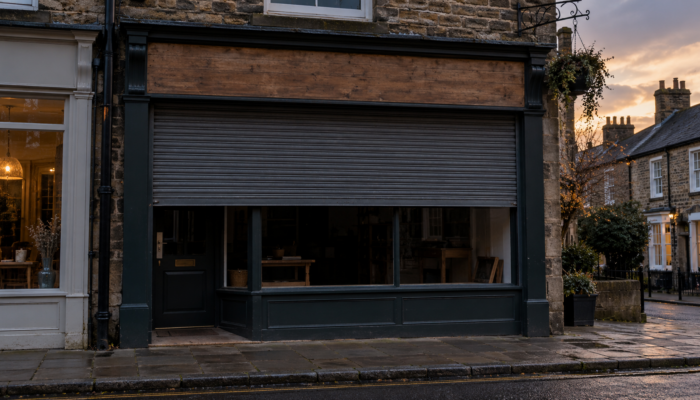
The shop doors are shut, the lights are off, and the till isn’t ringing. Unfortunately, the bills haven’t got the memo.
When unexpected damage stops your shop from trading as normal, the financial impact can go beyond repairing what’s broken. Lost sales and ongoing expenses can quickly become another headache. That’s where business interruption insurance for shops may come into the picture.
But what does it actually cover? And when might it come into play? Let’s unpack it without the insurance jargon overload.
What is business interruption insurance for shops?
Business interruption insurance is designed to help with certain financial losses when a shop’s trading is interrupted or reduced following insured damage.
The important bit? It’s about lost income after insured damage, not simply having fewer customers. A quiet week, falling footfall, new competition, a general downturn or deciding to close your shop wouldn’t normally trigger business interruption cover.
On a typical retail policy, business interruption is a separate section that only applies if it’s been selected and appears on the policy schedule.
Think of it as looking beyond the damage itself. While property insurance may deal with damaged premises or contents, business interruption insurance focuses on certain financial consequences of that damage, subject to the policy terms.
Why does business interruption usually follow insured damage?
Here’s where the wording matters. Business interruption cover is usually linked to the property damage section of a shop insurance policy. This often means there must be damage covered under that section, or damage of a kind recognised by the policy, before business interruption cover can respond.
Imagine a shop that suffers insured damage. Even after the immediate damage has been dealt with, repairs may mean the business cannot trade normally. Depending on the policy, business interruption cover may help with certain financial losses during that disruption.
However, not every interruption counts. The cause of the damage, the cover selected and the policy conditions all matter.
Some policies may include extensions for particular situations beyond the main damage cover. These vary, and the policy wording explains when they may apply.
What might business interruption insurance cover?
A shop doesn’t stop having financial commitments just because trading has stopped. That’s the thinking behind business interruption insurance.
Depending on how the policy is written, cover may be based on lost gross profit, lost revenue or another defined measure of financial loss.
Gross profit has a particular meaning in insurance, which may differ from the figure used in everyday business accounting. The policy wording explains what’s included and how any covered loss is calculated.
Some policies may also cover certain additional costs incurred to keep trading or reduce the interruption. For example, temporary arrangements following insured damage may involve extra expenses, although whether these qualify depends on the policy.
The key distinction is that business interruption cover is generally concerned with the financial impact of insured damage, rather than paying to repair or replace damaged items.
For a closer look at the physical items a retailer may insure, there’s also our related read, Business stock insurance for retailers.
What is the indemnity period?
Insurance jargon alert! This one sounds complicated, but the basic idea is fairly straightforward.
The indemnity period is the maximum length of time that business interruption cover can apply following the damage, subject to the terms of the policy.
It’s not necessarily the same as the time spent repairing the shop. Trading might resume while the business is still experiencing disruption connected to the insured damage.
Equally, cover doesn’t automatically continue until everything feels back to normal. The period stated in the policy schedule sets an important limit on how long the insurance may respond. Different policies can have different terms, so the schedule and wording explain how the indemnity period applies.
How is the amount insured worked out?
A busy shop and a quieter little boutique may have very different financial pictures. That’s why the amount insured under business interruption cover is linked to the business and the way the policy measures its financial losses.
Policies may use different definitions and conditions when calculating the amount insured. Depending on the wording, the relevant information could relate to the shop’s trading income or gross profit.
If the amount insured doesn’t adequately reflect the business, underinsurance may affect a claim. This could mean the policy doesn’t respond to the full extent of an otherwise covered loss.
The policy schedule shows the amount selected, while the wording explains the applicable basis and conditions. There’s no universal calculation that applies to every shop insurance policy.
What doesn’t business interruption insurance usually cover?
Let’s clear up a common misunderstanding. Business interruption insurance isn’t a safety net for every disappointing day behind the till.
A slow sales period, customers shopping elsewhere, reduced footfall, competition or a general economic downturn wouldn’t normally be covered. Neither would a business simply choosing to close without a qualifying insured event.
Common exclusions also often include interruptions connected with communicable diseases, although the exclusions and any applicable extensions differ between policies.
Even where a shop has suffered damage, that doesn’t automatically mean every resulting financial loss is covered. The type of damage, the circumstances, the cover selected and the policy conditions can all affect whether a claim falls within the insurance.
The policy wording and schedule are the places to find the specific exclusions, limits and conditions that apply.
What happens if trading is interrupted?
When unexpected damage disrupts a shop, there’s often plenty happening behind the scenes. Alongside sorting out the immediate problem, there may be insurance conditions to follow.
Policies usually require the insurer to be notified promptly when an incident may lead to a claim. The wording explains the relevant reporting requirements and how the claims process works.
Keeping records is often part of that process too. Depending on the policy, records of trading, the interruption and any additional expenses may help establish the financial impact of the damage.
Policyholders are also usually expected to take reasonable steps to continue trading where possible or reduce the loss. Any specific responsibilities will be explained in the policy wording.
Is business interruption insurance worth including?
Every shop runs a little differently. Some rely heavily on their physical premises, while others may have different ways of trading when their usual space isn’t available.
Business interruption is just one aspect of shop insurance, and understanding its purpose can help make sense of the options within a typical retail policy.
Whether to include business interruption insurance, and on what terms, is the retailer’s own decision. The schedule and policy wording explain what cover has been selected, along with its limits, exclusions and conditions.
For a broader look at retail insurance, see What can retail business insurance cover? and What types of insurance does a retail business need?. Both explore the wider picture, while this guide focuses on interrupted trading after insured damage.
Frequently asked questions
Does business interruption insurance cover a quiet month?
No, not normally. Business interruption insurance is generally designed for certain financial losses following insured damage, not a quiet month, reduced footfall, competition or a general drop in sales. A business simply choosing to close wouldn’t normally qualify either.
Do I need property damage cover for business interruption insurance to work?
Business interruption cover is often linked to insured property damage, so the damage usually needs to be covered or recognised under the policy. The exact relationship depends on the wording, including any applicable extensions, so the policy schedule and wording are important.
What is an indemnity period in business interruption insurance?
It’s the maximum period during which business interruption cover may apply following insured damage, subject to the policy terms. The period is set out in the policy schedule and doesn’t necessarily match the time taken to repair the physical damage.
Explore retail business insurance
Running a shop comes with enough surprises without insurance terminology adding to the confusion. Understanding what business interruption cover is designed to do, and what it usually doesn’t cover, makes the policy details easier to follow.
You can get a quote through the retail business insurance page on the Insureworks website and explore the cover options and terms available. Quotes and cover come from our insurance partner, not Insureworks.
This page is information only and is not personal advice. Insureworks is not the insurer and does not underwrite or pay claims.