
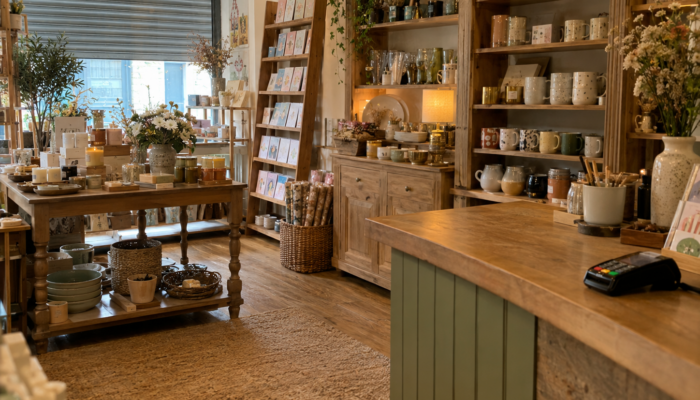
The till’s ringing, the shelves are stocked, and the shutters are ready to come down at closing time. But there’s another question on the shop owner’s mind: how much does shop insurance cost?
The answer? It depends on your business and the cover selected. There’s no single price that applies to every shop. Different business details and cover selections may affect what you pay, and the only way to see an actual price is to get a quote.
Here’s a closer look at the kind of information insurers typically ask for, the cover sections a retail policy may include and what else matters when considering the cost.
What is a shop insurance quote based on?
Every shop has its own story. From what happens behind the counter to when the shutters come down, a shop insurance quote usually starts with specific details about the business and its premises.
These details may affect the price quoted. However, there’s no fixed rule here about how an individual answer changes the cost.
The business
A typical quote form starts with information about the business itself, which may include:
- Main business activity: Usually chosen from the insurer’s list of trades it can cover.
- Where income is generated: Where the business’s income is generated.
- Total turnover: The business’s total turnover.
- People working in the business: Including the owner.
- Annual staff costs: Total staff costs for the year.
- Year established: When the business was established.
Not every trade can be quoted. Insurers usually have a list of trades they can cover, and the main business activity needs to be on it for the business to proceed through the quotation process.
Together, these answers form part of the information an insurer uses when producing a quote. The eventual price depends on the details submitted and the cover selected.
The premises and security
What happens when the last customer leaves and the shutters come down? Insurers also tend to ask about the trading premises and their security arrangements.
A quote form may ask for the trading address and details such as:
- Whether the premises close before or after 11pm.
- Whether window and door shutters are installed.
- What type of alarm is fitted: none, centrally signalled or other.
- Whether a sprinkler is installed.
Each answer forms part of the quotation information and may affect the price. However, the presence or absence of any particular security feature doesn’t establish what the quote will be.
What is being insured?
Insurers may also ask whether the business owns the building or is responsible for insuring it. Alongside this, a quote form may ask whether the business wants to insure contents and whether it wants to insure stock.
These selections help establish what is being included in the quotation. The price may vary depending on the answers and the cover selected, with the actual insured sections recorded in the policy schedule.
How do the cover sections selected shape the price?
It’s not just the information entered into the form that matters. The sections of insurance selected also shape what is being priced.
A typical retail policy is made up of cover sections, with cover applying only where the relevant section is shown as selected in the policy schedule. Common sections include:
- Property damage: Cover for buildings, contents and stock, depending on what is selected and insured.
- Public and products liability: Cover relating to public and products liability, subject to the policy terms.
- Business interruption following insured damage: Cover for business interruption following insured damage, subject to the policy terms.
- Money and assault: Cover relating to money and assault, subject to the relevant policy conditions.
- Goods in transit: Cover relating to goods in transit, where selected in the schedule.
- Loss of licence: Cover relating to loss of licence, subject to the policy terms.
These sections aren’t automatically all included. The schedule identifies which sections have been selected, and the policy’s limits, sub-limits, excesses and conditions apply. Employers’ liability is included in some retail policies and not others, while professional indemnity and treatment or malpractice cover are often arranged separately.
For further information about retail insurance generally, two related reads are What is retail business insurance? and What can retail business insurance cover?
What else makes up the amount paid?
Beyond the quotation details and the cover sections selected, there are other aspects of the policy’s payment arrangements and terms to understand.
Payment arrangements and Insurance Premium Tax
The premium is payable annually in advance, or by monthly instalments where offered. The available payment arrangement is separate from the question of which cover sections appear in the policy schedule.
Insurance Premium Tax (IPT) is a government tax that applies to insurance policies. It’s another part of understanding insurance payments, although the individual price is only available through a quote.
Excesses, limits and sub-limits
Excesses, limits and sub-limits apply to the policy. An excess is the amount the policyholder is responsible for in relation to a claim, while limits and sub-limits restrict amounts payable under the relevant cover.
The actual terms depend on the policy documentation and schedule. These details matter when understanding what the insurance covers, rather than looking only at the quoted premium.
What happens if the policy is cancelled?
If the policy is cancelled within 14 days and no claim has been made, it is treated as though it never existed, with a full refund of the premium.
After 14 days, cancellation may result in a pro rata refund, subject to a minimum retained premium, administration costs and no claim having been made or being pending.
Why do accurate answers matter?
A shop can change over time. The details recorded when insurance starts may not remain the same throughout the policy year, so accuracy isn’t just relevant when completing the original form.
Answers given to the insurer must be accurate and current, and changes during the year must be reported. Inaccurate or outdated information may affect the insurance cover or how a claim is handled.
Are there restrictions on shop insurance cover?
There are important restrictions to look out for. Each policy sets out the territory it covers, and some only cover Great Britain, not Northern Ireland. Cover usually applies only to the business activities and premises shown in the policy schedule.
Security, safety and maintenance conditions often apply, and many policies restrict cover if premises are left unoccupied for a set number of consecutive days, so the policy conditions and schedule remain important alongside the quoted price. Common exclusions include communicable diseases, cyber risks (except where an insured peril causes physical damage), gradual causes and wear and tear.
Frequently asked questions
Is there an average price for shop insurance?
There’s no single average that can reliably tell a business what its policy will cost. The price depends on the business details and cover selected, and a quote is the only way to see an actual price.
Can the price change during the year if the business changes?
Changes to the business may affect the insurance arrangements and potentially the premium. Any changes during the policy year usually need to be reported, so the insurer can establish how they affect the policy.
Does Insurance Premium Tax apply to shop insurance?
Yes. Insurance Premium Tax (IPT) is a government tax that applies to insurance policies. The price for a particular shop is only available through a quote, based on the details supplied and the cover selected.
Can every shop get a quote?
No, not every shop can get a quote. Insurers usually have a list of trades they can cover, and the main business activity needs to be on it. The quotation process also depends on the information provided.
Get a shop insurance quote
So, how much does shop insurance cost? There’s no magic number hiding in the till. The price depends on the business information supplied to the insurer and the cover selected.
You can get a quote through the retail business insurance page on the Insureworks website. Quotes and insurance cover come from our insurance partner, not Insureworks.
This page is information only and is not personal advice. Insureworks is not the insurer and does not underwrite or pay claims.