
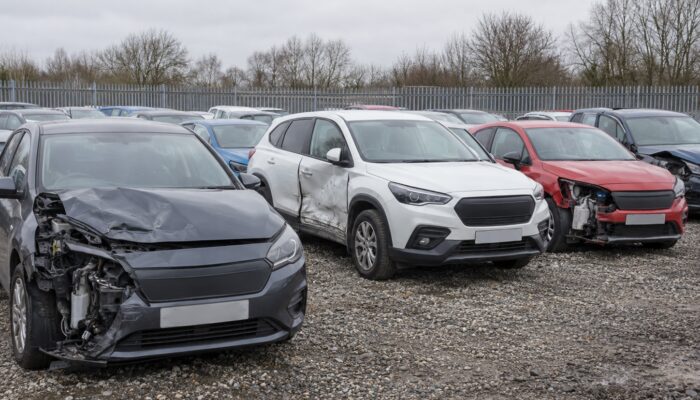
If a car has been written off by an insurer, the letter attached to it matters. The current UK insurance write-off categories are A, B, S and N. Categories A and B cannot return to the road as complete vehicles. Categories S and N are repairable and can be used again once they have been repaired to a roadworthy condition.
That is the short version. The more useful question is what each category says about the damage, whether any part of the vehicle can be reused, and what the category can mean if the car is sold or insured later.
This guide sticks to the categories themselves. For the wider process after a vehicle is declared a total loss , the assessment, the valuation, the settlement and the DVLA steps , see Car Written Off: What Happens Next?.
What are insurance write-off categories?
They are salvage classifications applied after an insurer has decided a damaged vehicle is a total loss. They separate vehicles that must be destroyed from those considered repairable.
Insurers apply them under the Association of British Insurers’ Salvage Code of Practice, which is an industry code rather than legislation. The classification normally follows an assessment by a suitably qualified person, weighing the damage, whether the vehicle can be repaired safely and whether any parts remain suitable for reuse.
The DVLA does not choose the category. It comes out of the insurance and salvage assessment, although the DVLA records information about written-off vehicles.
What does Category A mean?
Category A is the scrap-only category. The vehicle is not suitable for repair and cannot return to the road.
The part people often miss is that Category A also rules out reusing its parts. The vehicle is destined for destruction rather than being dismantled for components. GOV.UK puts it plainly: the entire vehicle has to be crushed.
Can a Category A car ever go back on the road?
No. Category A is not a vehicle waiting for an expensive repair. It has been classified for destruction, and it cannot later be rebuilt and returned to use. That is what makes it fundamentally different from Categories S and N, where the vehicle itself remains repairable.
What does Category B mean?
Category B also means the vehicle cannot be repaired and returned to the road, with one significant difference from Category A: suitable parts may still be recovered and reused.
The body shell has to be crushed, while components that remain serviceable can be salvaged. That is how GOV.UK describes it.
Why are Category A and Category B separate?
The distinction is about what happens to the parts. With Category A there is nothing intended for reuse. With Category B the complete vehicle is still beyond repair, but some components may have another life elsewhere.
A Category B classification does not suggest the car could be rebuilt because some of its parts survived. The structure and identity of a Category B vehicle do not return to the road. For road use, A and B reach the same destination; they differ only on the parts.
What does Category S mean?
Category S means repairable structural damage: damage that has affected the structural frame or chassis of the vehicle, needing repair, realignment or replacement.
“Structural” is more specific than “hit hard”. It refers to the load-bearing structure of the car rather than to panels and trim. A Category S vehicle has sustained that kind of damage, but the assessment considers it capable of repair.
Can a Category S car go back on the road?
Yes, once it has been repaired to a roadworthy condition. GOV.UK lists Category S as repairable and usable again after repair.
What the category does not do is say anything about the quality of that repair. It tells a future owner that structural damage is part of the vehicle’s history, which is exactly why the evidence around the repair matters when the car changes hands.
Category S is recorded. Where a keeper retains a Category S vehicle, the existing V5C goes to the insurer and a replacement log book is issued with the category recorded in it.
What does Category N mean?
Category N means repairable damage that did not affect the structural frame or chassis. The vehicle can return to the road once it is roadworthy.
Category N does not mean cosmetic damage only
This is the most commonly misread category on the list. “Non-structural” is not a synonym for “minor”.
A Category N vehicle may have cosmetic damage, but it can equally have faults involving mechanical, electrical or safety-related components , steering, suspension, brakes or electrical systems among them. The letter N says where the damage was, not how serious or how expensive it was.
Unlike Category S, a keeper retaining a Category N vehicle can normally keep the existing V5C. So a clean-looking log book is not a substitute for checking a vehicle’s wider history.
What happened to Category C and Category D?
Categories C and D were the old repairable write-off categories. They stopped being used for new classifications in 2017, when S and N replaced them.
They are not simply renamed, and this is worth understanding if you are looking at an older car. The old system sorted repairable vehicles mainly by repair economics: broadly, Category C where the estimated repair cost exceeded the vehicle’s pre-accident value, and Category D where it did not. The S and N system sorts them by the nature of the damage instead , structural or non-structural.
Vehicles categorised before the change keep their historic classification, which is why Category C and D cars still appear for sale. For one of those, the useful question is not whether C equals S, but what damage the vehicle actually sustained and what evidence exists of the repair.
What does a write-off category mean when the car is sold, insured or valued later?
A repairable write-off does not lose its history when the repairs are finished. That history can stay relevant to buyers, insurers and anyone assessing what the vehicle is worth.
Selling a Category S or N car
A previously written-off car can usually be sold once it is legally back in use, but the history may affect demand and price. There is no single official percentage by which every Category S or N vehicle is worth less. The category is one part of the picture, alongside age, mileage, condition, specification and the evidence of repair.
Insuring a Category S or N car
A repaired Category S or N car can normally be insured for road use, but approaches vary between insurers, and cover is not guaranteed to be available or priced the same as an equivalent car without that history. A category does not tell you what any particular insurer will do; that depends on their own underwriting. It is worth establishing that cover is available before buying rather than afterwards.
Valuing a previously written-off car
The category forms part of the car’s known history, so it can matter when working out what the vehicle is worth. It does not create a fixed “Cat S value” or “Cat N value”. Two cars with the same letter can have very different damage, repairs, mileage and condition behind them, and treating the category as a fixed discount gives a false sense of precision.
Can you buy a car in each write-off category?
The category decides whether buying the complete vehicle for road use is possible at all.
| Category | Can the complete car return to the road? | What it means for a buyer |
|---|---|---|
| A | No | The vehicle must be destroyed. It is not a road-going purchase, and its parts are not intended for reuse either. |
| B | No | The body shell must be destroyed, although suitable parts may be recovered for use elsewhere. |
| S | Yes, after repair to a roadworthy condition | The vehicle has a history of structural damage. Evidence of the damage and of the structural repair is what matters. |
| N | Yes, after repair to a roadworthy condition | The damage was non-structural, which does not mean it was minor. It may have involved mechanical, electrical or safety-related components. |
For a repairable written-off vehicle, sensible checks include the vehicle’s history, whether the VIN and V5C match, MOT and service history, evidence that the repair was carried out properly, and, where more assurance is wanted, an independent engineer’s inspection. Checking that insurance is available before buying is worth doing too.
Where does GAP insurance fit with a write-off category?
Briefly, because this guide is about the categories rather than the product: under the GAP products Insureworks arranges, a vehicle that has already been declared a total loss or write-off is not eligible, and the vehicle must have been purchased less than 180 days before the policy starts. So a car that already carries a category cannot be covered.
For a vehicle that does meet the eligibility criteria, GAP insurance may pay an eligible difference following a total loss, depending on the type of policy and subject to its terms, limits, exclusions and the maximum benefit shown in the schedule.
If your own car has just been given a category, and GAP cover was already in place before the total loss, that is a different situation: an existing policy may still respond, subject to its terms. Car Written Off: What Happens Next? covers what happens next in that case.
Insureworks Ltd arranges and distributes insurance on a non-advised basis. It does not underwrite these policies and does not pay claims. Insureworks Ltd is an appointed representative of Your Company Matters Ltd, which is authorised and regulated by the Financial Conduct Authority (FCA). The insurer is Financial & Legal Insurance Company Limited.
For more on the product, see What is GAP insurance? and What does GAP insurance cover?, or look at the GAP insurance options.
Write-off category FAQs
What are the four insurance write-off categories?
A, B, S and N. Category A is scrap only and the whole vehicle must be destroyed. Category B vehicles cannot return to the road, although suitable parts can be salvaged. Category S covers repairable structural damage and Category N covers repairable non-structural damage.
What is the difference between Category S and Category N?
Where the damage was. Category S means the structural frame or chassis was affected and needs repair, realignment or replacement. Category N means the damage did not reach that structure. Both are repairable and both can return to the road once roadworthy.
Is Category N just cosmetic damage?
No, and this is the most common misreading of the categories. Non-structural damage can still involve steering, suspension, brakes or electrical systems. The letter describes where the damage was, not how serious or how costly it was to put right.
Is Category S the same as the old Category C?
No. The old C and D categories sorted repairable vehicles mainly by whether the repair cost exceeded the car’s pre-accident value. S and N sort them by whether the damage was structural. Cars categorised before the 2017 change keep their original letter.
Can you insure a Category S or N car?
Usually yes once it is repaired and roadworthy, but approaches differ between insurers and cover is not guaranteed to be available or priced like an equivalent car without that history. It is worth confirming cover is available before buying rather than after.
Can I buy GAP insurance for a car with a write-off category?
No. Under the products Insureworks arranges, a vehicle that has already been declared a total loss or write-off is not eligible, and the vehicle must have been bought less than 180 days before the policy starts. What does GAP insurance cover? explains what the cover can do for an eligible vehicle.