
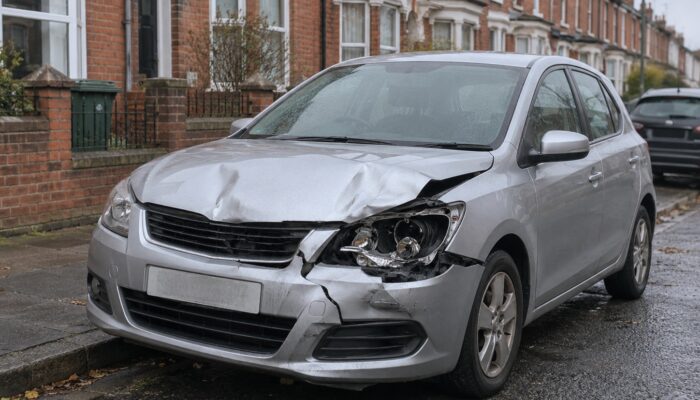
If your car has just been written off, the process usually moves through a few clear stages. Your insurer assesses the vehicle, decides whether it is a total loss, assigns a write-off category, values the car and makes a settlement offer. What happens to the vehicle after that depends on its category and the settlement you agree.
If the car is on finance or lease there is another figure in play: the amount needed to settle that agreement. That figure and your motor insurer’s valuation are not necessarily the same.
One point about GAP insurance is worth getting out of the way immediately, because it affects what this page can and cannot do for you.
You cannot buy GAP insurance for a car that has already been written off
Under the products Insureworks arranges, the vehicle must not previously have been declared a total loss or write-off, and must have been purchased less than 180 days before the GAP policy starts. Both are eligibility requirements.
So for the car that has just been written off, GAP only enters the picture if cover was already in place before the total loss. It is not something that can be added to this claim now. It may be worth understanding when you come to replace the vehicle, and there is a section on that further down.
The rest of this guide is about the write-off process itself: what happens, in what order, and what you need to do.
What does “written off” mean for a car?
A car write-off, also called a total loss, means the motor insurer has decided not to repair the vehicle. That does not always mean the car is physically beyond repair. Some vehicles cannot safely be repaired; others could be repaired, but the insurer decides repairing them does not make economic sense against what the car was worth before the damage.
The decision belongs to the motor insurer. GOV.UK sets out that when a damaged vehicle is claimed for, the insurer decides whether it is written off and how much it will pay.
A fairly ordinary-looking knock can end in a write-off, particularly on a lower-value car where parts, labour, recovery and storage add up quickly against the value of the vehicle.
What happens when a car is written off?
Individual insurers run their claims differently, so treat this as the usual shape rather than a fixed procedure.
1. The incident is reported
The claim starts with the accident, theft or other insured event being reported to the motor insurer. They will normally ask what happened and may arrange recovery or storage if the car cannot be driven. At this stage nothing has been written off: that decision comes after the damage has been assessed.
2. The vehicle is inspected and assessed
The insurer will normally arrange an assessment, which can involve a physical inspection, photographs, repair estimates and an engineer’s report. They are looking at the extent of the damage, whether the car can be repaired safely, the likely repair cost, and what the vehicle was worth before the incident.
3. The write-off decision and the category
If the insurer treats the vehicle as a total loss it will normally assign one of four salvage categories.
| Category | What it means |
|---|---|
| A | Cannot be repaired. The entire vehicle must be crushed. |
| B | Cannot be repaired. The body shell must be crushed, although some parts can be salvaged. |
| S | Structural damage, but can be repaired and used again if returned to a roadworthy condition. |
| N | Non-structural damage, and can be repaired and used again if returned to a roadworthy condition. |
These are the categories set out by GOV.UK. The category matters because it decides what can happen to the car afterwards: a Category A or B vehicle cannot go back on the road, while Category S and N vehicles can potentially be repaired and returned to use. A separate guide covers the categories in more detail.
4. The insurer values the car
Once the car is being treated as a total loss, the insurer will normally work out what it considers the vehicle was worth immediately before the incident. That is the important distinction: the settlement is generally based on market value before the loss, not on what you originally paid.
Age, mileage, exact model and specification, condition and vehicle history can all affect that figure. The Financial Ombudsman Service looks at specialist motor valuation guides and other relevant evidence when it considers valuation disputes.
5. You receive a settlement offer
The insurer will normally put a proposed settlement to you based on its valuation and the terms of your policy. The useful number is not the headline valuation on its own but the actual settlement calculation, because policy-specific deductions can apply. If finance is outstanding, a lender may also be involved in how the settlement is paid.
Can you challenge a car write-off valuation?
Yes. If you think the insurer has undervalued the car, the valuation can be challenged. Useful evidence includes adverts for genuinely comparable vehicles, and anything showing the insurer has used the wrong mileage, specification, model or condition.
The Financial Ombudsman Service notes that comparisons need to be as close as possible on things like registration year, mileage and specification. One unusually expensive advert does not settle the question; what matters is whether the evidence as a whole supports a different pre-loss market value.
If it cannot be resolved with the insurer directly, their complaints procedure comes first. The Financial Ombudsman Service may then be able to consider the complaint once that process has been followed.
What happens to the written-off car?
That depends mainly on its category and on whether you keep it. For Category A the entire vehicle has to be crushed; for Category B the body shell has to be crushed, although usable parts may be salvaged. Category S and N vehicles can potentially be repaired and returned to the road if they are made roadworthy.
If the insurer takes ownership of the vehicle as part of the settlement, it will normally deal with the salvage. If you want to keep a Category S or N vehicle, GOV.UK sets out that the insurer can pay the claim and sell the vehicle back to you, with specific logbook requirements that follow. Any arrangement to keep the car needs to be agreed with the insurer rather than assumed.
What you need to do with the DVLA
There are DVLA steps once a vehicle has been written off. Where the insurance company has written off and scrapped the car, GOV.UK says you must tell the DVLA, and that failing to do so can mean a fine of up to £1,000.
The insurer will normally ask for the V5C logbook. The exact paperwork differs depending on whether the vehicle is handed over or retained, so follow the current GOV.UK process for your situation. If the vehicle is transferred to the insurer, DVLA will also cancel the vehicle tax once notified and refund any full remaining months. If the car carries a personalised registration number you want to keep, it needs to be taken off the vehicle as part of the process.
What happens if the written-off car is on finance?
A write-off does not make the finance agreement disappear. There are two separate figures:
- the motor insurer’s settlement, based on the vehicle and the motor policy terms; and
- the finance settlement figure, which is the amount your lender requires to settle the agreement.
Those figures can differ. A car can fall in market value faster than the outstanding balance comes down, which leaves a shortfall between what the motor insurer pays and what is still owed. The write-off itself does not close the finance account: the finance provider decides what remains payable and confirms when the agreement has been settled.
This is the situation in which GAP cover that was already in place can become relevant.
Where GAP insurance fits after a write-off
To repeat the point at the top, because it is the one that matters if you have arrived here after a write-off decision: GAP insurance cannot be taken out after the event for this car under the products Insureworks arranges. The vehicle must not already have been declared a total loss or write-off when cover begins, and must have been purchased within the 180-day eligibility window.
Where cover was already in place, what it may pay depends on the type of policy, its terms and the claim.
- Return to Invoice GAP may pay the difference between the motor insurance settlement and the original invoice price paid for the vehicle, including factory-fitted options, delivery charges and VAT where you are not VAT registered, or in some circumstances the settlement amount required by the lender.
- Vehicle Replacement GAP may pay the difference between the motor insurance settlement and the cost of a like-for-like replacement.
- Contract Hire and Lease GAP may pay the shortfall between the motor insurance settlement and the remaining liability under an eligible lease or contract hire agreement.
In each case the most the insurer will pay is the maximum benefit shown in the policy schedule, and each is subject to the eligibility requirements, exclusions and limits in the policy. None of these outcomes is automatic, and a motor insurance settlement is part of the calculation in all three.
Insureworks Ltd arranges and distributes these products on a non-advised basis. It does not underwrite them and does not pay claims. Insureworks Ltd is an appointed representative of Your Company Matters Ltd, which is authorised and regulated by the Financial Conduct Authority (FCA). The insurer for the GAP products described here is Financial & Legal Insurance Company Limited.
For the product itself rather than the write-off process, see What is GAP insurance?, How does GAP insurance work? and What does GAP insurance cover?. If you are thinking about your next vehicle rather than this one, you can look at GAP insurance options when the time comes.
What happens to your car insurance after a write-off?
There is no single rule across every motor policy. Depending on the insurer and the terms, the policy may end once the total-loss claim is settled, or cover may be transferable to a replacement vehicle within a set period. Unused premium and the effect on a no-claims discount also depend on the policy terms, how the claim is recorded, and whether the insurer recovers its costs from someone else.
Before driving a replacement car, the practical point is to have confirmation that the replacement is actually insured. Cover on the written-off car does not necessarily carry across to another vehicle on its own.
Car written off: the practical checklist
- Has the insurer formally confirmed the vehicle is a total loss?
- Which write-off category has been applied?
- What pre-loss market value has the insurer used?
- What is the actual settlement offer after any policy-specific deductions?
- If the car is financed or leased, what is the separate settlement figure for that agreement?
- If you disagree with the valuation, what evidence supports a different figure?
- Is the insurer taking the vehicle, or has keeping a Category S or N car been agreed?
- Have the V5C and DVLA steps been completed?
- If GAP insurance was already in place, what does that policy require for a claim?
Car write-off FAQs
What does it mean when a car is written off?
It means the motor insurer has decided not to repair the vehicle, either because it cannot be repaired safely or because repairing it does not make economic sense against what the car was worth before the damage. The decision is the insurer’s, and it is followed by a salvage category, a valuation and a settlement offer.
My car has been written off. What do I do first?
Establish the facts in order: whether the insurer has formally confirmed a total loss, which category has been applied, what pre-loss market value has been used, and what the actual settlement offer is after any deductions. If the car is on finance or lease, ask the lender separately for the settlement figure, because it is a different number.
Can I buy GAP insurance now that my car has been written off?
No. Under the products Insureworks arranges, the vehicle must not previously have been declared a total loss or write-off, and must have been purchased less than 180 days before the policy starts. GAP is only relevant to this claim if cover was already in place. For a replacement vehicle it is a different question, and What is GAP insurance? explains the product.
Why is the insurer’s settlement less than I still owe on finance?
Because they are two different calculations. The motor insurer settles on what the vehicle was worth immediately before the loss, while the lender’s figure is what is required to settle the credit agreement. A car can lose value faster than the balance reduces, which leaves a shortfall. The write-off does not close the finance account on its own.
Can I challenge the valuation if I think it is too low?
Yes. Evidence of genuinely comparable vehicles, or of the insurer using the wrong mileage, specification, model or condition, can support a different figure. If it cannot be resolved with the insurer, their complaints procedure comes first, and the Financial Ombudsman Service may then be able to consider the complaint.
Do I have to tell the DVLA my car has been written off?
Yes, where the insurance company has written off and scrapped the vehicle. GOV.UK sets out that you must tell the DVLA and that failing to do so can mean a fine of up to £1,000. The insurer will normally ask for the V5C, and the paperwork differs depending on whether you are handing the vehicle over or keeping it.